|
Getting your Trinity Audio player ready...
|
For years, plenty of government employees and contractors built a life around remote work. They lived wherever they wanted, checked in online, and rarely saw the inside of a federal office. That changed fast. Return-to-office orders rolled out across agencies one after another, and suddenly thousands of workers had to figure out where their actual duty station was, and whether they needed to move closer to it. Florida has quietly become one of the top landing spots for this shift, and it is not just because of the beaches.
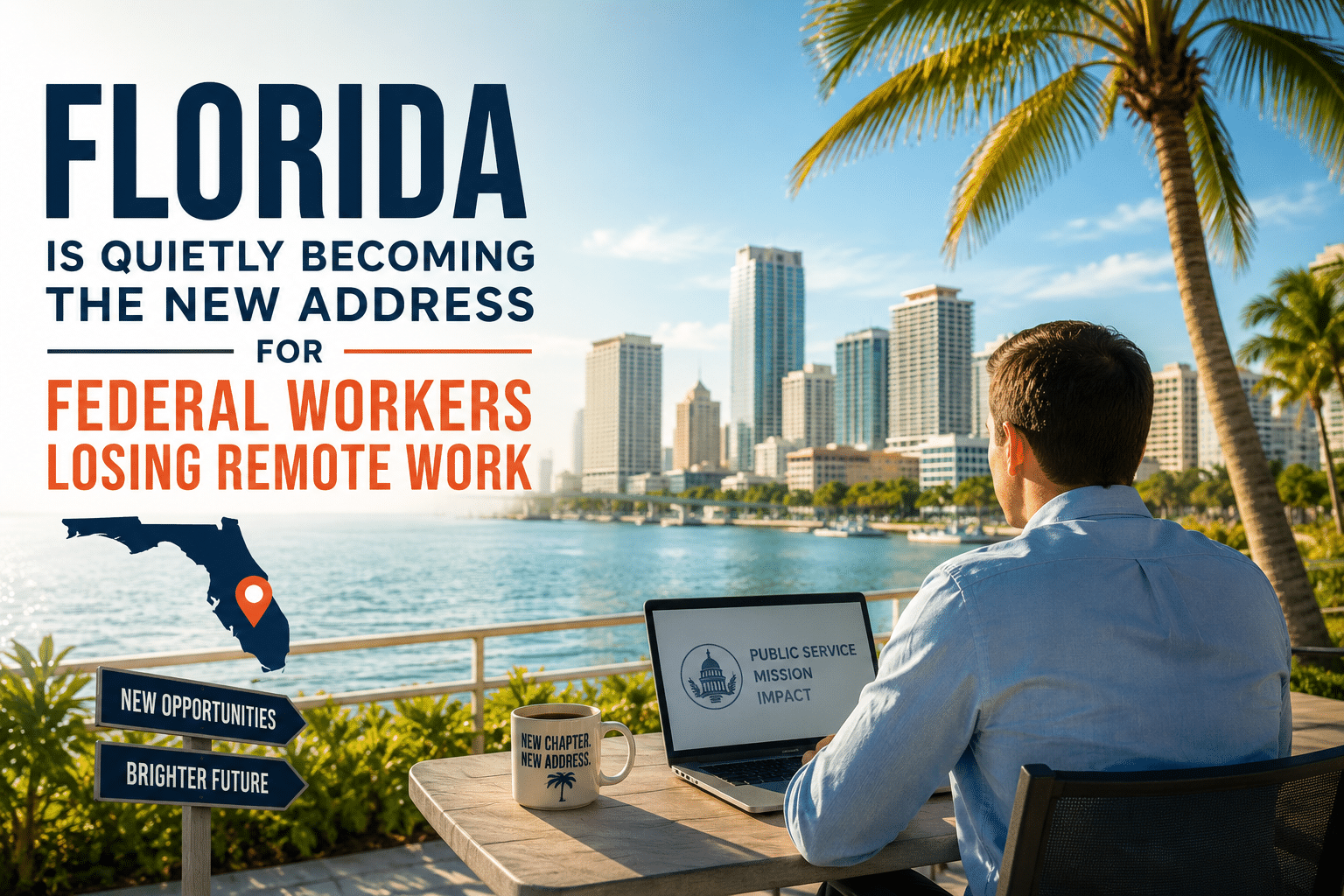
If you work for or with a federal agency, a defense contractor, or a government-adjacent business, you already know the state has a heavy presence here. Tampa is home to MacDill Air Force Base. Jacksonville has Naval Station Mayport. Pensacola runs one of the busiest naval air stations in the country.
The Space Coast around Cape Canaveral keeps growing thanks to Kennedy Space Center and a booming private launch industry. When RTO mandates pushed people back toward physical offices, a lot of them looked at these hubs and realized Florida checked every box: no state income tax, a lower cost of living than much of the Northeast, and warm weather year round.
Making the Move without Losing Your Footing
Relocating for work is stressful enough without adding a whole new state into the mix. The good news is you do not have to figure it out alone. Many federal employees end up needing support with things that have nothing to do with their actual job, like navigating a new lease, understanding local licensing rules, or getting temporary housing sorted before a report date hits.
Small, specialized firms that focus on contract and administrative support, such as Ultramarine Solutions, often work behind the scenes with agencies and contractors to smooth out these logistics so employees are not left scrambling on their own. If your move is tied to a federal contract, it is worth asking your employer or contracting officer whether this kind of support is already built into your relocation package before you spend money out of pocket.
Once you land in Florida, the next challenge is usually housing. A lot of newcomers get pulled toward the state’s older, character-filled homes, especially in cities like Tampa, Orlando, and St. Petersburg. These homes come with charm, but they also come with quirks that surprise people used to newer construction up north.
Older wiring, outdated insulation, and roofs that were never built with today’s storm codes in mind are common. If you are weighing whether to buy one of these homes, it helps to see how other Florida residents have gone about updating an older home without losing what makes it special.
Picking the Right Spot Near Your New Duty Station
Not every part of Florida works the same way for federal workers. If your agency or contract ties you to MacDill, living in South Tampa or Brandon usually means a manageable commute without the worst of I-4 traffic. Jacksonville workers tied to Mayport often look at Atlantic Beach or Neptune Beach for something quieter than downtown.
Around the Space Coast, Cocoa Beach and Merritt Island put you close to Kennedy Space Center while still giving you an actual beach lifestyle, which is a nice trade for someone leaving a fully remote job behind. Take time before you sign a lease or make an offer. Drive the commute at the time you would actually be doing it, not just on a quiet Sunday afternoon.
It is also worth looking beyond commute times alone. Compare the availability of grocery stores, healthcare facilities, schools, and everyday services that matter to your household. Some neighborhoods may have shorter drives to work but fewer amenities, while others offer a better balance of convenience and quality of life. Keep in mind that Florida’s rainy season can affect traffic and travel times, especially on major highways and coastal routes.
If you expect to stay for several years, research local property taxes, homeowners association rules, flood risk, and insurance costs before committing to a home. Spending a little extra time evaluating these practical factors can help you choose a neighborhood that supports both your work responsibilities and your day-to-day lifestyle long after the move is complete.
Why This Trend Is Bigger Than It Looks
This is not a small, temporary blip. Recent reporting has tracked how dramatically in-office requirements shifted in a short window, and the effects are still playing out across agencies and the contractors who support them.
One piece detailed how a district office saw real staff resistance when workers were called back, partly because remote arrangements had quietly become an expectation rather than a temporary fix, and partly because the shift created costs for both the agency and nearby businesses that depend on foot traffic. That same tension is playing out nationwide, and Florida is absorbing a good share of the workers who decided a full relocation made more sense than fighting the mandate.
If you are in this position, do not treat the move as just a paperwork exercise. Give yourself time to research neighborhoods near your actual duty station, get a realistic sense of commute times, and line up support for the logistics you cannot handle alone. Florida offers a genuinely good landing spot for federal workers navigating this shift, but like any move, the details matter more than the sunshine.