Operating a company in the Sunshine State means accepting the reality of sudden, intense storms. While the idyllic coastal lifestyle attracts millions of residents and tourists, the same environment threatens commercial stability. When dark clouds gather over the peninsula, preparation makes the difference between a minor interruption and a catastrophic financial loss.
Understanding how the environment interacts with physical assets allows owners to protect their investments effectively.
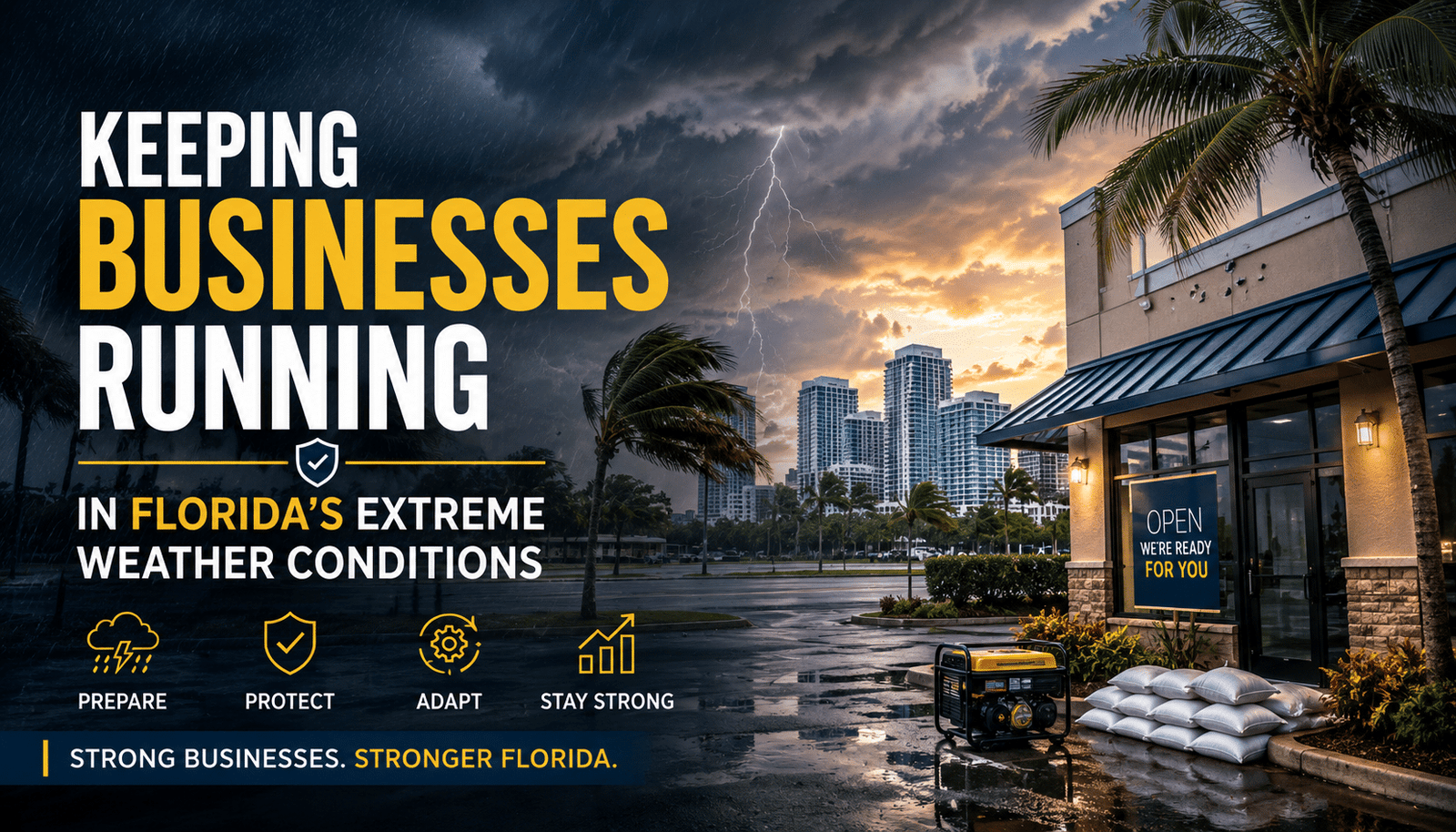
Why extreme weather is a constant challenge for Florida businesses
Florida faces relentless exposure to severe hurricanes alongside heavy inland flooding and coastal storm surges. These physical forces regularly damage local infrastructure, severing electricity lines and rendering transportation networks completely unusable.
If you manage a hotel, event venue, or tourist attraction, you already recognize how vulnerable your daily operations are to these sudden disruptions. An unexpected power loss forces immediate closures and introduces severe supply chain delays. Consequently, regional visitor numbers drop drastically during prolonged recovery periods.
To mitigate these specific risks, audit your property by reviewing municipal flood maps and establishing secondary delivery routes before the summer storm season begins.
The role of resilient infrastructure in maintaining operations
Modern commercial operations rely entirely on robust power grids and dependable communication networks. Recognizing this continuous dependency, local governments across Florida regularly invest in upgraded materials to combat structural hurricane damage.
As an enterprise leader, you benefit directly from these municipal improvements, but you also bear responsibility for securing your own facility. Hotels and major attractions require absolute operational continuity to keep guests secure during an active weather event.
From reinforced generators to automated emergency alerts, many commercial setups depend on small but critical components like connectors that help ensure systems remain stable under intense physical pressure.
Inspect your building’s technological integration points annually to guarantee internal networks survive external shocks.
Designing for durability: how businesses prepare for harsh environments
The peninsula’s unique climate introduces persistent environmental threats beyond active storms.
High humidity and corrosive salt air constantly interact with rapid temperature shifts to actively degrade commercial equipment. Moisture intrusion accelerates corrosion and triggers electrical short circuits, leading to expensive system failures at the worst possible moments.
Facility managers defeat these hidden challenges by specifying highly durable, weather-resistant hardware for all exterior applications. Specialized industrial parts successfully withstand high vibration while repelling constant atmospheric moisture. By integrating these hardened materials into your facilities, you significantly reduce unexpected downtime and shield your long-term revenue.
Upgrade standard commercial hardware to marine-grade alternatives to ensure your heavy equipment survives this demanding environment.