|
Getting your Trinity Audio player ready...
|
I have managed commercial property around Northeast Florida for the better part of two decades, and I keep noticing the same blind spot. Owners will spend real money on the lobby, the monument sign, the landscaping near the entrance, and then completely forget about the single largest surface on the whole property: the parking lot.
The parking lot is the first thing a customer drives across, and usually the last thing anyone budgets for, right up until it turns into a problem nobody can ignore. Down here, that habit costs you, and the reason comes down to our weather.
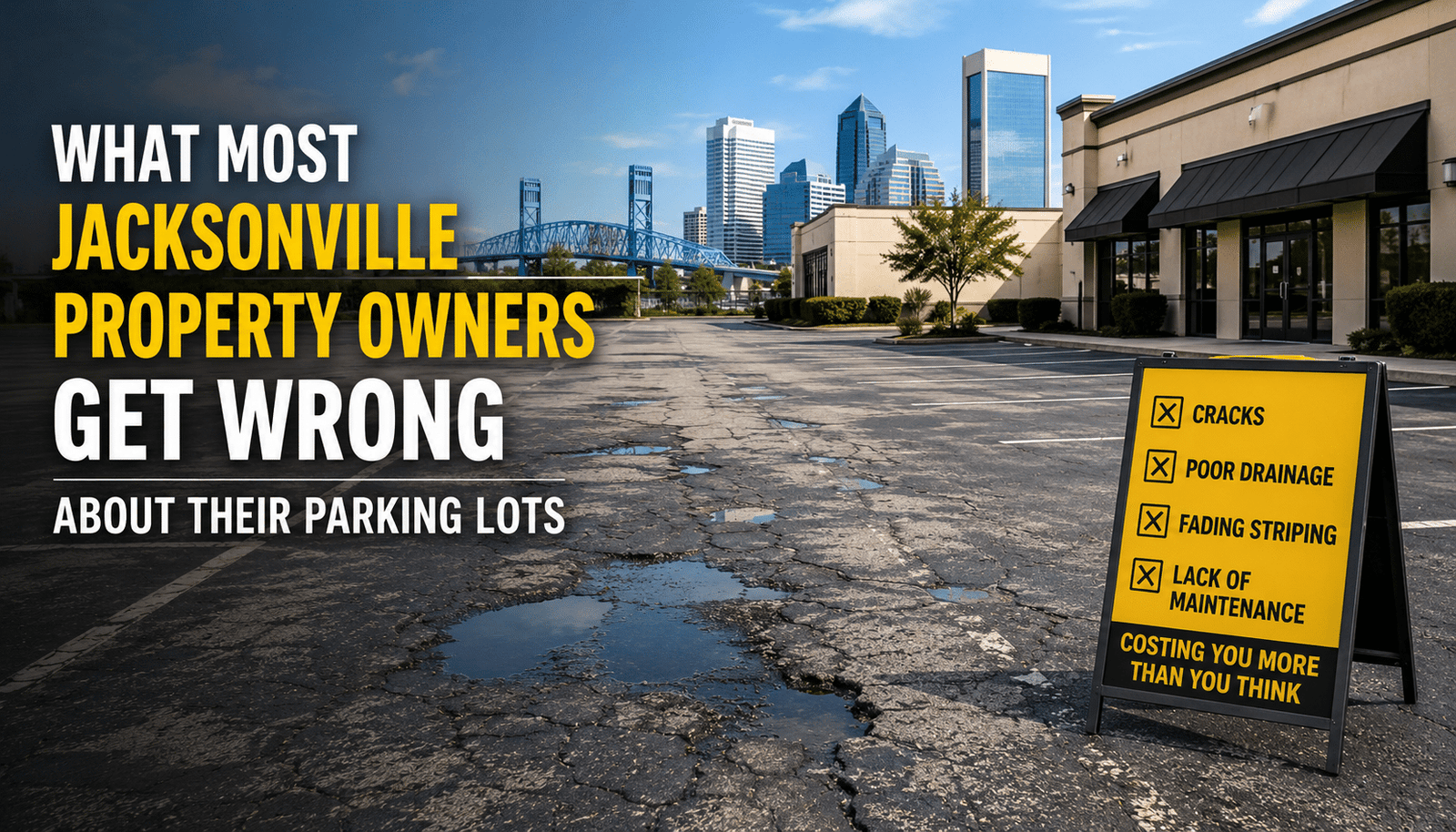
People who move to Jacksonville from up north assume asphalt takes a beating in cold climates because of the freeze and thaw cycle. That is true, but our sun does its own kind of damage year round. Ultraviolet light slowly breaks down the binder that holds the asphalt together.
The surface goes from black to a faded gray, it gets brittle, and small cracks start to show. Then summer arrives with those afternoon storms that dump an inch of rain in twenty minutes. Water finds the cracks, works its way down into the base layer, and once the base is compromised you are no longer looking at a cosmetic issue. You are looking at potholes, soft spots, and eventually a full tear out and repave.
I learned this the expensive way on a retail strip I helped oversee off Atlantic Boulevard. We had been told for two years that the lot needed attention. By the time we finally dealt with it, what could have been a routine maintenance line item had turned into a five figure repair, along with the headache of closing off sections of the lot during business hours while tenants complained. The frustrating part is how preventable most of it is.
Sealcoating is the piece owners tend to skip because it is easy to skip. A fresh lot looks fine for a few years, so the assumption is that it will keep looking fine. It will not. A good sealcoat is basically sunscreen and waterproofing for your asphalt. It puts a protective layer over the surface that blocks UV, keeps water out, and resists the oils and fluids that drip off vehicles all day. The general rule I follow is to sealcoat every two to three years, though our climate pushes that toward the shorter end. If you skip it, you are letting the sun and the rain age your lot at double speed.
Timing matters more than people think. You want the work done when the surface is dry and temperatures cooperate, which in Jacksonville means planning around the rainy stretches rather than fighting them. A contractor who knows the local pattern will steer you toward the right window instead of just slotting you in whenever.
The other thing that gets ignored is striping, and this one carries legal weight, not just curb appeal. Faded parking lines make a lot look neglected, but the bigger issue is ADA compliance. Accessible spaces, access aisles, and the proper signage are not optional, and worn out striping can put you on the wrong side of a complaint or a fine. I have watched property owners get caught flat footed on this during a lease renewal or a sale when an inspection flagged it. Re-striping is cheaper, refreshes the whole appearance of the property, and keeps you compliant at the same time.
It’s important to treat the parking lot like the asset it actually is. It carries every customer, every delivery, every employee onto your property. Letting it degrade sends a message about how the rest of the operation is run, and fixing it after the fact always costs more than maintaining it would have.
For the buildings I am involved with on the east side of town, I have worked with Appell Striping & Sealcoating in Jacksonville, FL when it is time to handle this kind of work. What I appreciate is that they understand the local conditions and do not try to upsell you on things you do not need. They will tell you when a lot genuinely needs a full sealcoat versus when it can wait another season, which is rarer than it should be in this trade.
This just requires getting ahead of it instead of reacting once the damage is done. Walk your lot this month, and look for the gray fade, the spider cracks near the edges, the lines you can barely make out in the spaces farthest from the door. If you are seeing those signs, your asphalt is already telling you what it needs. The only question is whether you listen now while it is affordable, or later when it is not.